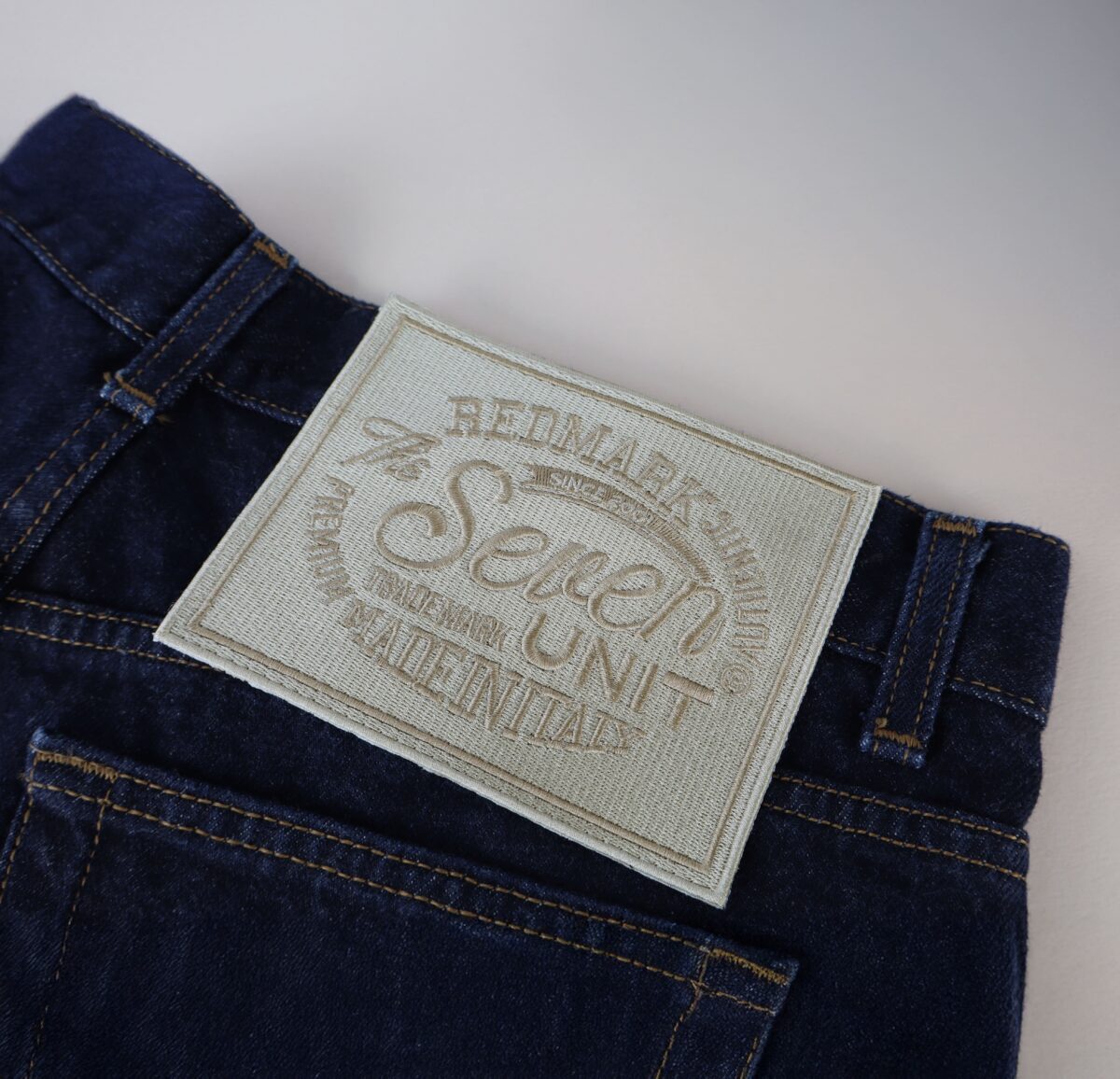
Custom patches are appliqués carrying the brand logo or graphics, sewn or applied on the garment to add character and recognisability. They are one of the most versatile accessories in fashion, able to turn a jacket, a hoodie, a bag or a cap into a piece with a strong identity. Redmark makes them to measure in Italy, choosing material and technique according to the brand style and the type of garment.
If you are looking for custom patches for your brand, the choice concerns the type of patch (embroidered, rubberised in relief, printed, leather) and the way it is applied to the garment. Below you will find what they are, the types compared and the most frequent questions, with links to the in depth pages.
What custom patches are
A custom patch is a support carrying the brand or a graphic, made in embroidered fabric, rubberised material, print or leather, applied to the garment by stitching, with heat or with other systems. In the fashion world the English term patch is used, while in Italian they are also called toppe. Unlike a label, which carries the garment information, the patch has above all a decorative and identity function, and often becomes the graphic element the customer recognises at a glance.
Where they are used
Patches accompany a wide range of garments and accessories, from fashion to streetwear, from workwear and company uniforms to sportswear, and on to bags, caps and brand backpacks. They carry the logo, an icon or a graphic, and are used both as a permanent distinctive mark and as a collection detail that changes season by season. In all these cases the patch combines aesthetics, durability and brand recognisability.
Patch types and materials
Redmark makes patches in different techniques and materials. The choice depends on the desired effect, the garment and the durability required.
Embroidered patches
Embroidered patches are the classic type, with the logo created in thread on a fabric base and a three dimensional effect that adds depth and an artisanal value. They are the most requested and most recognisable, suited to fashion, workwear and sportswear.
In depth: Embroidered patches
PVC, silicone and TPU patches
PVC, silicone and TPU patches are the rubberised family in relief, made with micro injection for a sharp three dimensional effect and high resistance to water, UV rays and temperatures. They are the ideal choice for technical garments, sportswear and heavily used accessories.
In depth: PVC, silicone and TPU patches
Printed patches
Printed patches use high definition printing to reproduce complex logos, detailed graphics and vivid colours, on a light and flexible support. They keep their brightness and definition even after many washes.
Leather patches
Leather patches give an elegant and refined touch, with high quality leather that combines aesthetics and resistance. They suit jackets, bags, footwear and accessories that want a warm and natural detail.
Woven and high frequency patches
Woven patches create the logo by interlacing the threads, for a flat and precise result, while high frequency impresses a three dimensional relief effect. They are two different ways to obtain a clean patch that lasts over time.
The types compared
| Type | How it is made | Effect | When to choose it |
|---|---|---|---|
| Embroidered | Logo in thread on fabric base | Three dimensional, artisanal | Fashion, workwear, sportswear |
| PVC, silicone, TPU | Rubberised micro injection | Sharp relief, resistant | Technical garments, sportswear, accessories |
| Printed | High definition printing | Detailed graphics and colours | Complex logos, casual garments |
| Leather | Custom leather | Elegant and natural | Jackets, bags, premium accessories |
| Woven | Interlaced threads | Flat and precise | Clean and linear logos |
How they are personalised and applied
The patch is customisable in shape, size, colours and technique, according to the logo and the brand style. Application to the garment can be done by stitching, with heat or with an adhesive backing, according to the material and the intended use. Technique and application are defined together, for a result consistent with the brand identity and resistant to use and washing.
Why choose custom patches
Patches combine decoration and recognisability. They give the garment immediate personality, they communicate the brand style with a single element and they resist daily use well. With the right type, embroidered, rubberised, printed or leather, the patch adapts to every garment and every style, from fashion to technical.
Patches in the brand system
The patch performs best when it is coordinated with the other brand elements. Along with patches, Redmark makes woven, metal and leather labels, hangtags, ribbons and packaging such as shopping bags, boxes and dust bags. Coordinating materials and finishes makes the brand consistent across the whole collection. → See also: Custom labels · Custom hangtags · Leather labels
Why choose Redmark
Redmark is an Italian company producing packaging and accessories for fashion, based in Carpi (MO), in the heart of the textile and fashion district, active since 2001 with an approach that combines design, research and production. It designs and makes patches and all the other brand accessories to measure, following the project from the choice of material to the finish, with the consistency and quality that an off the shelf product cannot offer.
Frequently asked questions
What are custom patches?
They are appliqués with the brand logo or graphics, in embroidered fabric, rubberised material, print or leather, applied to the garment by stitching, with heat or with adhesive. In Italian they are also called toppe.
Which types of patch are there?
The main ones are embroidered, PVC silicone and TPU, printed, leather and woven. Each has a different effect and durability and is chosen according to the garment and the style.
Which patch is the most resistant?
PVC, silicone and TPU patches are among the most resistant to water, UV rays and wear, so they suit technical garments and sportswear. Embroidery is also very durable and keeps its shape and colour over time.
How are patches applied to the garment?
By stitching, with heat or with an adhesive backing, according to the material and the intended use. The best solution is chosen together based on the type of garment.
What is the difference between a patch and a label?
The patch has above all a decorative and identity function, with the logo or graphic in evidence. The label carries the garment information such as size and composition. They often coexist within the same collection.
Can I coordinate them with labels, hangtags and packaging?
Yes. Redmark makes patches together with labels, hangtags, ribbons and coordinated packaging, so materials and finishes stay consistent across the whole line.

