Custom labels are the small elements, woven, printed, embroidered or in metal and leather, that carry the brand’s logo on a garment or accessory and communicate identity, composition and size. They are a tiny but decisive detail, often the last thing the customer touches and the first they recognise. Redmark designs and produces them to measure in Italy, with the right technique and material for each garment.
If you are looking for custom labels for clothing, to sew into the collar, for composition and washing, or applied outside as the brand’s signature, the choice depends on the technique (woven, embroidered, printed, heat transfer, metal, leather) and the use. Below you will find every type Redmark makes, a comparison table and the most frequent questions.
What custom labels are and what they are for
A custom label is a small support, in fabric, leather, metal or technical material, applied to a garment or accessory to show the brand and the useful information. It performs three functions together. The first is identity, with the logo and the brand name. The second is information, meaning composition, size, washing instructions and origin. The third is perceived value, because a beautiful label communicates quality and care at first contact.
In fashion the label is an integral part of the product. It changes depending on where it is applied, inside the collar, on the seams or outside as a visible signature, and on the chosen technique, which drives look, durability and cost.
Redmark label types
Redmark makes all the main types of label for clothing and accessories.
Woven labels
The logo and text are created by weaving coloured threads on a loom with the jacquard technique. The design is part of the fabric itself, with a flat, thin, elegant result that stays precise even on small characters. They are the classic label sewn into the collar or the seams, the most common in quality clothing. → Read more: Woven labels
Embroidered labels
The logo is embroidered with thread onto a fabric base, with a raised, three dimensional, tactile and artisanal effect. They convey quality and are also used as patches applied outside the garment.
Printed labels
The graphic is printed directly on the fabric. It is the most economical and versatile solution, suited to complex graphics, gradients and composition and washing labels.
Heat transfer labels
They are applied with heat, without stitching, directly onto the garment. They are ideal for technical and sportswear and for garments where stitching is not possible or not wanted. → Read more: Heat transfer labels
Metal labels
Metal plates and logos applied to bags, leather goods, jeans and accessories, for a solid, premium effect. They are one of the most recognisable elements in fashion and leather goods. → Read more: Metal labels
Leather and faux leather labels
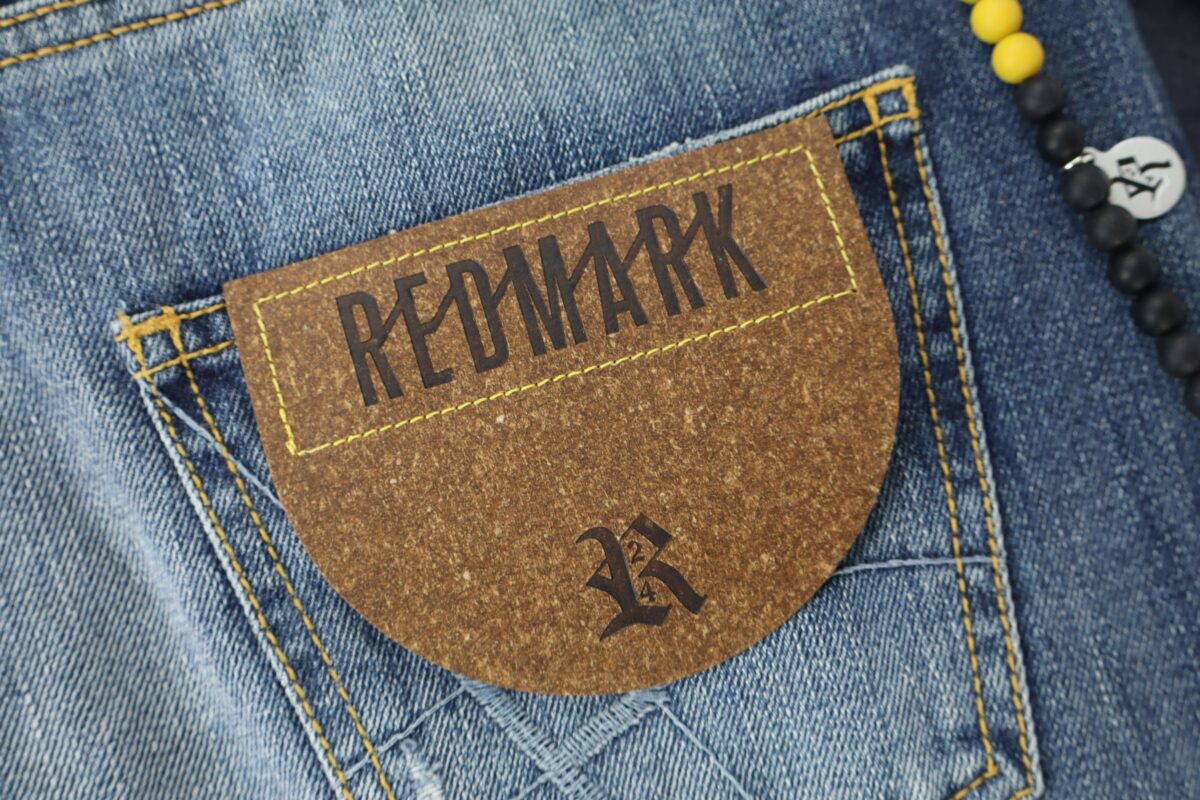
Patches and labels in leather, faux leather or eco leather, customisable with engraving, printing or hot stamping. Perfect for jeans, leather goods, caps and garments that want a warm, natural detail. → Read more: Leather labels
Laser cut labels
Made with laser cutting and engraving, they offer clean edges, precision and a neat, modern look, suited to fine details and technical materials.
High frequency labels
Obtained by high frequency welding, they give a raised effect on PVC and plastic materials. More than a type of their own they are a finishing technique, used also for patches and high impact labels.
Comparison table
| Type | Technique and look | Ideal use |
|---|---|---|
| Woven | Jacquard threads, flat and precise | Collar and seams, quality clothing |
| Embroidered | Raised thread, three dimensional artisanal effect | Outer signature, premium garments, patches |
| Printed | Direct print on fabric, economical | Composition and washing, complex graphics |
| Heat transfer | Applied with heat, no stitching | Technical and sportswear |
| Metal | Metal plate or logo, premium effect | Bags, leather goods, jeans, accessories |
| Leather and faux leather | Engraving, printing, hot stamping | Jeans, leather goods, caps |
| Laser cut | Laser cutting and engraving, clean edges | Fine details, technical materials |
| High frequency | High frequency welding, raised on PVC | Patches and statement labels |
How to choose the right label
The choice depends on where it goes and what it has to communicate. For the inside of the collar and the seams, where comfort and legibility matter, woven labels are the standard. For the outer signature of the garment, as a visible detail, embroidered, metal or leather labels work well. For the mandatory composition and washing information, direct printing is the most practical. For a premium effect on bags and leather goods, metal and leather make the difference. A single garment often carries more than one label, one for the brand and one for composition.
Materials and production techniques
Redmark makes fabric labels in the materials best suited to clothing, that is polyester, cotton, satin and nylon, plus metal and leather or faux leather for the dedicated versions. The production techniques cover the whole range. Jacquard weaving for the woven labels, embroidery for the raised effect, direct printing for graphics and composition, heat transfer application without stitching, high frequency welding for the raised details on PVC, laser cutting and engraving for maximum precision, engraving and hot stamping for leather and metal. The right technique depends on the material, the detail of the logo and the final use.
Customisation and finishing
Every label is customisable in the logo, the colours, the format and the finish. You choose the material and the technique according to the effect, flat and clean with woven labels, three dimensional with embroidered ones, technical with heat transfer, premium with metal and leather, along with the finishing details such as edges, folds and cut. The goal is a label consistent with the brand identity and with the other elements of the garment and the packaging.
Labels in the brand system
A label performs best when it is part of a consistent system. Along with labels, Redmark makes hang tags, patches, leather goods, ribbons and drawstrings and the packaging such as shopping bags, boxes, dust bags, pouches and garment bags. Coordinating labels and packaging with the same materials, colours and finishes makes the brand recognisable in every detail, from the garment to the box.
See also: Shopping bags · Boxes · Dust bags · Garment bags · Ribbons and drawstrings
Why choose Redmark
Redmark is an Italian company producing packaging and accessories for fashion, based in Carpi (MO), in the textile and fashion district, active since 2001 with an approach that combines design, research and production. It designs and makes labels, patches, hang tags and packaging to measure, following the brand from the choice of technique and material to the finishing. The result is quality, consistency across the different elements and customisation that an off the shelf product cannot offer.
Frequently asked questions
What is the difference between woven and embroidered labels?
Woven labels have the logo woven into the threads of the fabric, so they are flat, thin and precise. Embroidered labels have the logo embroidered with raised thread, with a three dimensional and more artisanal effect.
What types of label can I request from Redmark?
Woven, embroidered, printed, heat transfer, metal, leather and faux leather, laser cut and high frequency. Each type has a technique and materials dedicated to its use.
What materials are the labels made of?
For fabric labels we use polyester, cotton, satin and nylon, plus the versions in metal and in leather or faux leather.
Where are labels applied?
Inside the collar, on the side seams or outside the garment as the brand’s signature. The metal and leather versions also on bags and leather goods.
Are they also used for composition and washing instructions?
Yes. Composition and washing labels, usually printed, carry fibres, size and care symbols.
Can I have a raised logo?
Yes, with embroidered, high frequency or metal labels, which give a three dimensional effect.
Woven or printed, which is better?
Woven labels are more elegant and durable, ideal for the brand logo. Printed labels are more economical and versatile, suited to complex graphics and to composition labels.
Do you make metal and leather labels?
Yes, they are two dedicated lines: metal plates for bags and leather goods, and leather or faux leather patches for jeans and accessories.
Can I have a coordinated system?
Yes. Redmark makes labels together with coordinated hang tags, patches and packaging, for a consistent brand image across every detail.

